


Ambali Backs Indigenous Languages in Varsities
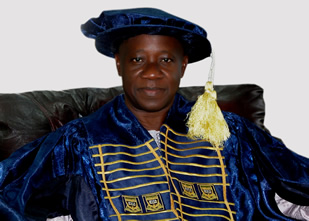
The Vice-Chancellor of the University of Ilorin, Kwara State, Prof. Abdulganiu Ambali, has said the adoption of indigenous languages as a language of instruction in tertiary institutions will preserve Nigerian identity and culture.
He added that it would enhance national cohesion and ensure preservation of Nigerian indigenous languages.
Speaking with journalists in Ilorin on Saturday, Ambali added that it would also increase cultural tourism as foreigners would be keener to learn more about the lifestyle of Nigerians.
He said with commitment by the Federal Government on the policy and with sacrifices of both the lecturers and the students, the policy would work.
He said that the call for the adoption of indigenous languages had been on for a while.
He added that with time, the initial challenges would be overcome, adding that there was the need to give the policy a chance.
He said, "It is not impossible. It is a matter of commitment. Once it is made a policy, it will work. Even our convocation lecturer advocated that we would be better off if we teach our students initially with indigenous language. I think it will work; we only need to give it a chance. Of course, there are challenges because when you are talking about Nigeria, you have to evolve the Nigerian way of achieving that.
"Because if you are in the south west, you may want to use Yoruba to teach but you also have to understand that there may be some people who are from other states that may be posted there, from East or from core North who may want to bring along their families and if they have children of various age groups, then where do they start from in learning Yoruba so that they can translate that into English.
"Once the Federal Government decides that this is what we are going to do, given time and once we are ready to make sacrifices, then I am sure, it will work. I was born here and I schooled in the North. So I picked up Hausa along the way and I can communicate fairly well."
The VC also urged tertiary institutions in Nigeria to adopt proactive strategies to forestall impending national food scarcity arising from the recent flooding of some states in Nigeria.
He stated that faculties of agriculture of universities and other tertiary institutions should research into production of high yielding seedlings that would mature in a short time when planted.
He said efforts must be made by relevant stakeholders to address the impending food scarcity.
He also said the environmental faculties of institutions in Nigeria should ensure that they come up with accurate weather forecasts that could guide the nation into making informed decision and adopting proactive measures to forestall natural disasters.
Cloud Tag: What's trending
Click on a word/phrase to read more about it.
Aliyu Adebayo Quarry Royal Valley Theophilus Oyebiyi Modibbo Kawu Erubu Cassava Growers\' Association Mopelola Abdulmaliq-Bashir Yakubu Danladi Maigida Joseph Yemi Ajayi Kuliyan Geri Olufolake Abdulrazaq Oasis Muslim Care Foundation Umar Danladi Shero Oye Tinuoye Wahab Abayawo Shuaibu Yaman Peter Obi Ganmo Abdulmutalib Shittu Agbarere Atiku Abubakar Ishaq Salman Lucky Omoluwa Pakata New Naira Notes Ben Duntoye Apata Ajele Secondary School Ishola Moses Abiodun Muhammed Danjuma Kayode Ibrahim Mansur Alfanla Raimi Iyanda Muhammed Aliyu Patience Jonathan Kwara State Governor Buhari Saka Balikis Kehinde Muhammadu Buhari Kwara State Printing And Publishing Corporation Kemi Adeosun Suleiman Yahya Alapansapa Olubukola Kifayat Adedeji PAACO-PCL Consortium Kwara Primary Health Care Development Agency Kwara State Government Bio Ibrahim Toyin Sanusi Salihu S. Yaru Ajibola Ademola Julius Reuben Paraje CCT National Party Of Nigeria Olosi Of Osi Ita-Nmo Market Baakini Bisi Kristien Kazeem Gbolagade Aisha Buhari Undergraduate Bursary Sardauna Adedeji Onimago Bayo Ojo Sa\'adu Salahu Government House Kayode Alabi Elelu Kayode Issa Samuel Elizabeth Keatswa Fatimat Saliu Muritala Olarewaju Bamidele Aluko Ibrahim Abduquadri Abikan Awodun Is\'haq Modibbo Kawu Mohammed Abduraheem Kpotum Mohammed Baba