


Kwara Distributes Two Million Insecticide-Treated Nets to Fight Malaria
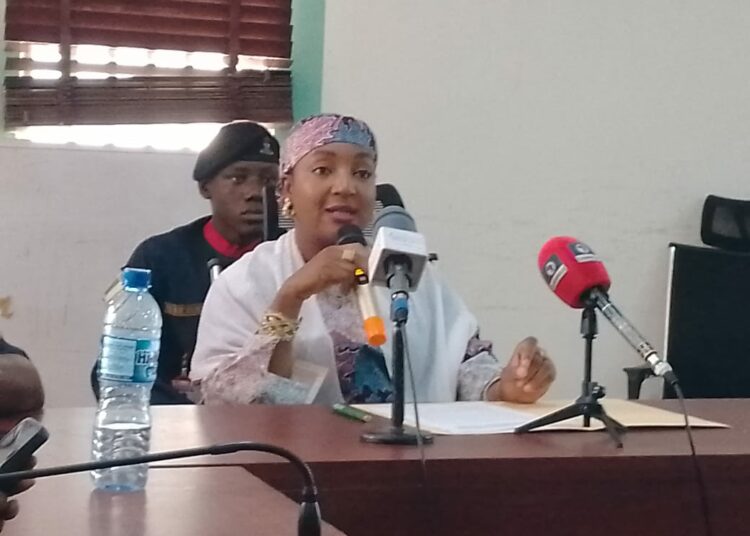
The Kwara State Government has announced the distribution of two million Long-Lasting Insecticide-Treated Nets to households across all 16 Local Government Areas as part of intensified efforts to reduce malaria transmission in the state.
According to a statement issued on Monday by the Press Secretary of the Ministry of Health, Saad Hamdalat, the initiative was announced in Ilorin during the 2026 World Malaria Day commemoration.
The Commissioner for Health, Dr. Amina El-Imam, said the intervention is part of a broader strategy to protect vulnerable groups and sustain gains recorded in malaria control over the years.
"This distribution of two million insecticide-treated nets is a major step in ensuring that every household has access to effective protection against malaria," she said.
She explained that the campaign is not a one-off intervention but part of a continuous public health strategy aimed at reducing malaria-related deaths and infections across communities.
Dr. El-Imam noted that the programme aligns with this year's global theme for World Malaria Day. "Driven to End Malaria: Now We Can. Now We Must," she stated, adding that the message reflects urgency and shared responsibility in eliminating malaria.
She also disclosed that the state will commence annual Seasonal Malaria Chemoprevention distribution by June 2026, targeting children aged three to 59 months during the rainy season.
"We are expanding preventive interventions, especially for children who remain the most vulnerable during the peak transmission period," she said.
The commissioner reaffirmed that malaria treatment remains free in designated public health facilities across the state, including access to Rapid Diagnostic Test kits, Artemether-Lumefantrine, and Intravenous Artesunate.
"No resident should lose their life because they cannot afford malaria treatment. That is why testing and treatment remain free in our public health facilities," she added.
Dr. El-Imam described malaria as a persistent development challenge, stressing that its burden remains highest in Africa and Nigeria in particular.
"Malaria continues to place a huge burden on our health system and economy. In 2024 alone, the world recorded 282 million cases and over 610,000 deaths," she said.
"Nigeria alone accounts for about 24.3 per cent of global malaria cases and 30.3 per cent of deaths. This is a reality we must confront with stronger commitment," she stated.
Despite the figures, she expressed optimism that progress is being made through sustained interventions.
"We are seeing encouraging results. Malaria prevalence in Nigeria has reduced significantly over the years, and with continued effort, we can push these numbers even lower," she said.
The Commissioner also highlighted Kwara State's progress, including the distribution of preventive drugs for pregnant women across more than 350 public health facilities.
"Protecting pregnant women is critical because malaria during pregnancy endangers both mother and child. That is why we have expanded preventive coverage across our facilities," she said.
Representing the WHO Regional Director for Africa, Dr. Mohammed Janabi, WHO Kwara representative Dr. Emmanuel Eyitayo said malaria remains one of the deadliest diseases affecting African children.
"Malaria still claims hundreds of thousands of lives every year, especially among children under five. This is unacceptable when solutions already exist," he said.
He noted that global innovations are improving the fight against the disease. "We are now seeing the introduction of malaria vaccines in about 25 countries, protecting nearly 10 million children annually," he added.
"Next-generation mosquito nets and digital surveillance systems are changing how we prevent and respond to malaria outbreaks," he said, while noting that funding gaps remain a challenge.
Earlier, the Head of Malaria Case Management in Kwara State, Dr. Kazeem Oladapo, said the state has recorded steady progress through collaboration with international partners.
"We have made significant progress in scaling up malaria interventions, but the disease is still responsible for about 20 to 30 per cent of hospital admissions.
"Malaria is not a mysterious disease. It is preventable, it is treatable, and with consistent effort, it is eliminable," he stated.
Cloud Tag: What's trending
Click on a word/phrase to read more about it.
Harrison Osauwagboe Folaranmi Aro Florence Saraki Orisun Igbomina Abdul-Rahoof Bello UNILORIN Alumni Rex Olawoye Kwara University Of Education National Union Of Road Transport Workers Kayode Yusuf Odo-Owa Tricycle Owners Association Of Nigeria Yakubu Gobir March 18 Kwara Central NIPOGA Haleeman Salman Saliu Ajia Shuaib Olarongbe S.O. Opowoye Tosin Saraki Sunday Popo-Ola Kayode Bankole Kabir Shagaya Gobir Organization Foundation Balikis Jawondo Afonja Descendants Union Nigerian Supreme Council For Islamic Affairs Law School Scholarship Saka Balikis Kehinde TESCOM Olabimpe Olani Gobirawa Ayobami Akanbi Moses Rahman Popoola Samuel Elizabeth Keatswa University Road Eruku FERMA Bamidele Aluko Wahab Kunle Shittu Pakata Olusola Saraki Saidu Isa Apado Magaji Nda Oni Adebayo Olusin Of Ijara Isin Ilorin Emirate Kwara State Governor Hamidu Olowo Damilola Yusuf Awodun Demola Banu Public Holiday Ganiyu Taofiq Isiaka Yusuf Salihu S. Yaru Ilorin Descendants Progressive Union Marafan Shonga Abdulrahman Iliasu Durbar Festival Ilorin Emirate Staff Association Muhammad Ghali Alaaya Isin Abdulkadri Ahmad Alaiye Garba Ayodele Wahab Islamic Development Bank Rafiu Ibrahim Millennium Development Goals Olokoba Yusuf Abubakar Bareke Yahaya Seriki Ileloke Iqra Books Roseline Oni Aremu