


A Glimpse into Ilorin History By Abdullateef Ishowo
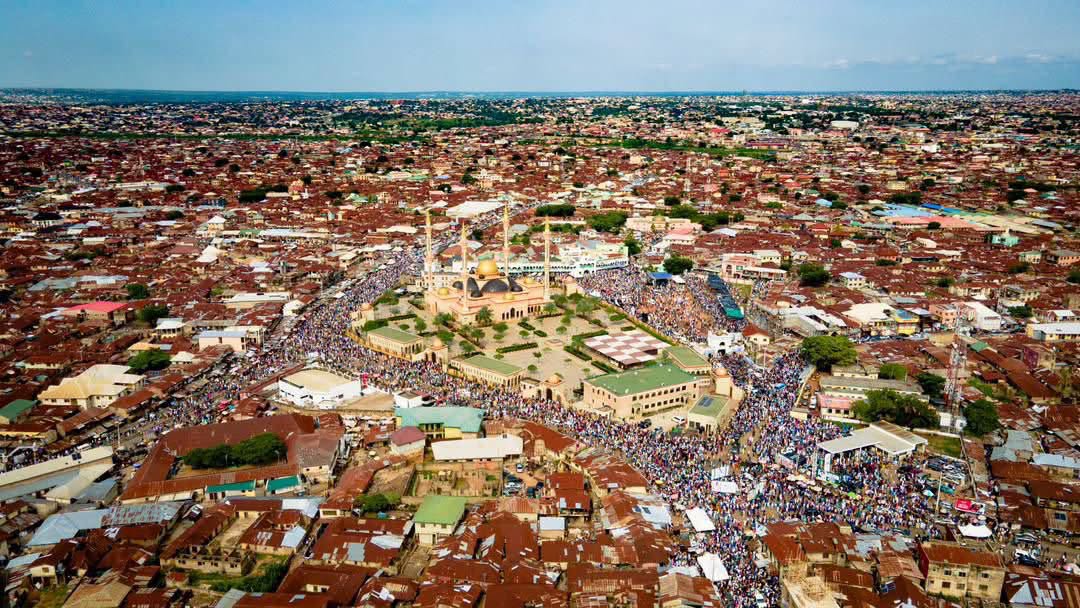
I have resolved to take up my pen and intervene in the increasingly shrill discourse on the history of Ilorin, and the clamour to "return the city to its origin" by installing a Yoruba Oba. A pursuit of shadows at the expense of substance? For months, this agitation has saturated social media. Frankly, I have dismissed it with quiet amusement.
Setting the records straight, Ilorin is a Yoruba-dominated city, but it was not exclusively founded by the Yorubas. This may offend the sensibilities of the new crop of social media historians, most of whom are remote from Ilorin and untutored in its antiquities.
Let me be direct, many of these commentators are historically ill-equipped. They neither read widely, nor consult archaeological records, nor conduct in-depth interviews with the surviving elders of the Southwest and of Ilorin itself - the very custodians of memory. Their aim appears to be provocation, not truth, and certainly not the preservation of the hard-won peace in our city. Foundation doesn't equal ownership. The fallacy that the founder's ethnicity confers perpetual ownership of a city must be buried. History refutes it.
Take Ogbomoso for instance, historical accounts confirm it was founded by Aale, a Nupe elephant hunter. His descendants remain the Ba'ale of Oke Elerin quarters to this day. The second settler was a Baruba herbalist later nicknamed 'Orisatolu'. His lineage still occupies the Ba'aleship of Isapa quarters. Successive waves of Baruba migrants joined him. Even the progenitor of the Shoun dynasty was not paternally Yoruba. He was the son of a Baruba hunter from Igbon. His mother was a Yoruba woman from Iresa.
The same pattern holds in Ilorin. The first inhabitant was a Baruba ascetic who dwelt at what is still called the Baruba area, near Idi-Ape of the Laderins. He predated Ojo Isekuse, the itinerant Yoruba hunter. The rock on which Ojo sharpened his iron tools -Ilo Irin lay adjacent to the Baruba hermit's abode, now partially known as Ile Bamidele. The Baruba quarter is contiguous to, and in fact bigger than Idi-Ape, where Afonja's descendants still reside.
Ojo, Emila, and Afonja's kin remain in that vicinity. Yet the Baruba imprint on the founding of both Ilorin and Ogbomoso lends credence to the Baruba claim that the entire northwestern Yoruba province - encompassing ancient Oyo-Ile, Igboho, Ilorin, Igbeti, Iseyin, Shaki, Ikoyi, Ogbomoso, and contiguous Yoruba towns - was Baruba territory prior to the arrival of Oranmiyan.
As documented by L.A.K Jimoh (1994) and corroborated by Yoruba oral tradition, it was by the magnanimity of the King of Barubaland that Oranmiyan, son of Oduduwa and progenitor of Oyo, was permitted to settle and establish Oyo-Ajaka, later Oyo-Ile. Samuel Johnson's "The History of the Yorubas" records that this concession spared Oranmiyan the disgrace of returning to Ile-Ife after his abortive military expedition to the Middle East.
History is not static. It is the chronicle of power, adaptation, and survival. The Fulani ascendancy in Ilorin has endured for over 250 years. To demand its abrupt termination now is to invite needless turbulence in an ancient, cosmopolitan city.
By the same logic, should we seek to "reverse" the eastern origins ascribed to Oduduwa - whether Saudi Arabia or Egypt - in 21st-century Nigeria? Civilization does not run backward.
It is also historically indefensible to assert that Sheikh Alimi killed Afonja. Authoritative accounts, including Jimoh's, establish that Alimi predeceased Afonja. The contest for supremacy was between Abdulsalam, Alimi's son, and Afonja. In the contest of power, Abdulsalam prevailed. Thus, the Alimi dynasty endured.
Every prior attempt to dislodge Ilorin and impose a Yoruba Oba has failed - militarily and politically. Why? Because Ilorin is bound by something stronger than ethnicity: Islam, the Central Mosque, and the revered Alimi stool.
More critically, we are bound by blood. Inter-ethnic marriage has fused us. A Yoruba woman who marries a Baruba or Fulani man bears an Ilorin child. That child knows no division. That is why attempts to fracture us will always fail.
To my Yoruba kinsmen agitating from afar, sheathe your grievances. Embrace your brothers and sisters in Ilorin who live in peace within a multicultural city under the benevolent leadership of His Royal Highness, Mai-Martaba Sarkin Musulmi, the Emir of Ilorin, Alh. Dr. Ibrahim Sulu-Gambari, CFR.
Let Ilorin breathe, its history is not a weapon. It is a covenant. Let us honour it.
Cloud Tag: What's trending
Click on a word/phrase to read more about it.
Saad Omo Iya Kale Kawu Ibrahim Jawondo Economic And Financial Crimes Commission HICA Ibrahim Kayode Adeyemi Eleja Owode Market Siraj Oyewale Aminu Ado Bayero Valsolar Consortium Galadima Isiaka AbdulRazaq Muhammadu Buhari Oluwatoyin Lukman Azeez Bello Yeketi Damilola Yusuf Igosun Durosinlohun Atiku Ita-Ore PAACO-PCL Consortium ER-KANG Academic Staff Union Of Universities Saba Jibril Bilikisu Oniyangi Saadu Gbogbo Iwe Demola Banu Kazeem Adekanye Bayo Lawal Salaudeen Oyewale Wole Oke Olatunde Jare Babajide Ajayi Simeon Ajibola Islamic Development Bank Prince Mahe Abdulkadir Shagari Simeon Sule Ajibola Unilorin FM Lanre Aremu Abraham Ojo Yoruba Modibo Kawu Jebba Borgu Haruna Olawale Sulaiman Cassava Growers\' Association Mustapha Akanbi Smart School Jamiu Oyawoye Ijakadi Saka Onimago Idofin Oju Ekun Sarumi Ahman Pategi University Centre For Community Empowerment And Poverty Eradication Amada Jidda Nigerian Medical Association Ibrahim Oniye Ahmad Uthman CLAY POT Oya State Oke-Oyi Ishaq Oloyede Ilorin South Constituency Isaac Gbenle Abegunde Goke AbdulRauf Keji Abdulrazaq Sanni Yahya Mohammed Ahmed Abdulwahab Ololele Woro LAK Jimoh Agor Niyi Osundare