Politics, leadership and accountability: The role of the people by Femi Falana, SAN
Date: 2017-05-28
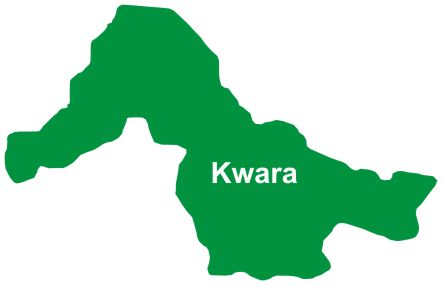
INTRODUCTION: I congratulate members of the Movement for Genuine Change on the occasion of the 50th year anniversary of the creation of the Kwara State.
I am delighted to participate in the historic celebration by the government and people of Kwara State. Although like other states in the country,Kwara State was established for the purpose of bringing the government closer to the people, it is regrettable to note that over the years, the government has been taken away from the people as a few powerful individuals have privatized the state and cornered its resources to the detriment of the people.
It is hoped that this movement will align with other progressive organizations to embark on the mobilization of the people to take their political destiny in their own hands. Political participation in politics By virtue of section 14 of the Constitution, sovereignty is said to belong to the people from whom the government shall derive its authority and legitimacy.
The welfare of the people shall be the primary purpose of the government while the participation by the people in their government shall be ensured in accordance with the provisions of this Constitution. Section 16 thereof stipulates that the national economy shall be managed in such a manner that the happiness and prosperity of the people will be guaranteed. But popular participation in politics has been hijacked by a few god fathers and money bags.
Candidates are imposed on political parties while elections are manipulated by the ruling political parties. Falana To ensure internal democracy in the political parties, the Electoral Act, 2010 as amended has provided for the election of candidates through direct and transparent party primaries which shall be monitored by officials of the Independent National Electoral Commission. But the provisions of the Constitution, Electoral Act and Guidelines as well as the rules of political parties are breached with impunity by party leaders because politics has been left in the hands of a few professional politicians.
It is high time the situation was changed in the overall interest of the society. The task of changing the course of history has to be taken up by the labour movement and other progressive organizations in the country. But the required mobilization must include the struggle for popular control and management of the national economy. The political economy of underdevelopment: In April 2014, the Federal Government celebrated the rebasing of the Nigerian economy as the largest in Africa.
As the rebasing was largely artificial, the economic status of Nigeria has since been reduced due to the fall in the price of crude oil in the international market and the devaluation of the national currency. Although the Federal government was forced to admit that Nigeria was in economic recession last year, the masses have always been in recession since the Structural Adjustment Programme was imposed on the nation about three decades ago. While the government has predicted that the economic recession would end this year, the United Nations has confirmed that 20 million people in four countries namely Nigeria, Somalia, Sudan and Yemen are at the risk of starving to death.
Nigeria is also far behind many poor nations in several areas of the human development index. In the midst of excruciating poverty confronting the people the government has no concrete empowerment programme that will lead to self reliance for the masses of our people. The paradox of poverty in the midst of plenty requires an understanding of the root cause of our crisis of underdevelopment. The Nigerian economy is controlled by market forces in line with the dictates of the International Monetary Fund and the World Bank.
It is an economic programme which has destroyed the middle class and reduced the quality of the life of the masses. Since the Nigerian people are opposed to the devaluation of the national currency, the dangerous policy has been carried out through the dubious dollarization of the economy. The dollar which exchanged for 60 kobo before the introduction of SAP in 1986 was recently sold for over N500.
In spite of the forex scarcity the government has continued to promote capital flight through the importation of goods which can be produced locally. With the fall in the price of crude oil the government has engaged in wasting the nation's reserves on the consumption of foreign goods by the parasitic and corrupt ruling class. As the poor are asked to tighten their belts, the system has continued to bail out the rich.
The over reliance on the private sector for the development of the country has ruined the economy. Indeed, the private sector is pampered by the system with loans and intervention funds, duty waivers and tax incentives running to hundreds of billions of Naira.
When the huge loans taken from the commercial banks threatened to collapse the economy, the federal government set up the Assets Management Corporation of Nigeria (AMCON) to buy them. The AMCON has found it difficult to recover loans of about N5.4 trillion owed by 50 companies in the private sector.
Meanwhile, the Peoples' Bank set up by the federal government in 1989 to provide loans without collaterals to indigent citizens was scrapped in 1992. The judgment of the Federal High Court that the Bank be restored has been ignored by the Federal Government.
The APC-led government has promised to give N5,000 monthly stipend to 25 million poorest citizens. It has also embarked on a feeding programme for primary school pupils. No doubt, the school feeding programme will increase school enrolment and improve the nutrition of school kids. If it is properly implemented, these tokenistic measures will go a long way to alleviate poverty among the masses.
It is however my submission that widows, youths and other vulnerable segments of the society cannot be self sufficient during economic recession because of the crisis of capitalism. The crisis is manifested in unemployment, poverty, infrastructural decay and insecurity of life and property.
The control of the economy has been left in the invisible hands of market forces. With respect, the control of the economy by market forces is illegal as it violates section 16 of the Constitution which has imposed a duty on the government to plan the economy and take control of the commanding height of the economy.
As a matter of fact the management of the economy by market forces is fraudulent. How can the State preach the gospel of free market and then turn round to consolidate banks? Does free market allow the State to set up AMCON to take over private companies and manage them due to the failure to pay loans? Does free market authorize the Central Bank to sell dollars to Banks and Bureau De Change operators on a weekly basis?
Is it part of free market policy to sell public assets to private investors and then provide them with intervention funds to run them? Or does free market support the granting of duty waivers to the private sector? The grand mismanagement of the economy under the pretext of promoting free market should stop.
On his arrival from his medical vacation in the United Kingdom during the first week of March this year, President Buhari confirmed that he received the best medical treatment and therefore urged Nigerians to invest in education. The federal government has to lead the way by voting substantial fund to infrastructural development as well as improved funding of health and education with emphasis on science and technology.
However, the education of our children should incorporate the teaching of core values of industry, national morality and integrity in line with the provisions of section 19 of the Constitution. In view of the overbearing influence of religion on the masses, the leaders of all faith based institutions should stop the practice of celebrating criminality in any manner whatsoever.
Recovery of looted wealth: The ongoing recovery of the nation's looted wealth should be supported by the masses on the condition that the proceeds of the crime committed against the people by the ruling class will be channeled toward job creation and infrastructural development.
However, I am not unaware that sections 20 and 21 of the EFCC Act provide that funds realized from the sale of properties of persons convicted abroad shall be paid to the coffers of the federal government and section 30 of thereof which provides that other recovered loot be paid into the federation account.
In the first place, the recovered funds have not been traced to the Federation Account. Secondly, section 162 of the Constitution provides that the Federation shall maintain a special account called "the Federation Account" to which shall be paid all revenues collected by the Government of the Federation. It is our submission that recovered loot does not form part of the revenue collected by the Government. To that extent, it cannot be paid to the Federation Account.
The recovered loot should therefore be transparently managed and spent on socioeconomic projects by the federal government. The federal government should stop releasing funds to state governments which are unable to account for the bailout fund and London/Paris club loan refund made available to them to fund the payment of salaries of workers and other development projects.
The anti graft agencies have a duty to investigate and bring to book the criminal elements who are alleged to have cornered and diverted the public fund. I call on the labour unions to ensure that the fund is fully accounted for as it was meant to alleviate the suffering of the working people.
Hypocrisy over Islamic banks The move to licence Islamic banks by the Central Bank of Nigeria has generated negative reactions from a number of Christian leaders. It ought to be pointed out that the establishment of banks by religious bodies is not illegal in so far as they are not run with public funds.
In fact, Christian leaders have a duty to support the establishment of free interest banks and other financial institutions. After all, it is clearly stated in Exodus 22:25 that "If you lend money to any of my people who are poor among you, you shall not be like a moneylender to him; you shall not charge him interest."
In tackling poverty among Christians it is also decreed that "if one of your brethren becomes poor, and falls into poverty among you, then you shall help him, like a stranger or a sojourner, that he may live with you.
Take no usury or interest from him: but fear your God, that your brother may live with you. You shall not lend him your money for usury nor lend him your food for profit".
Source