


KWACReSAL Partners IITA, NAERLS to Boost Climate-Smart Agriculture in Kwara
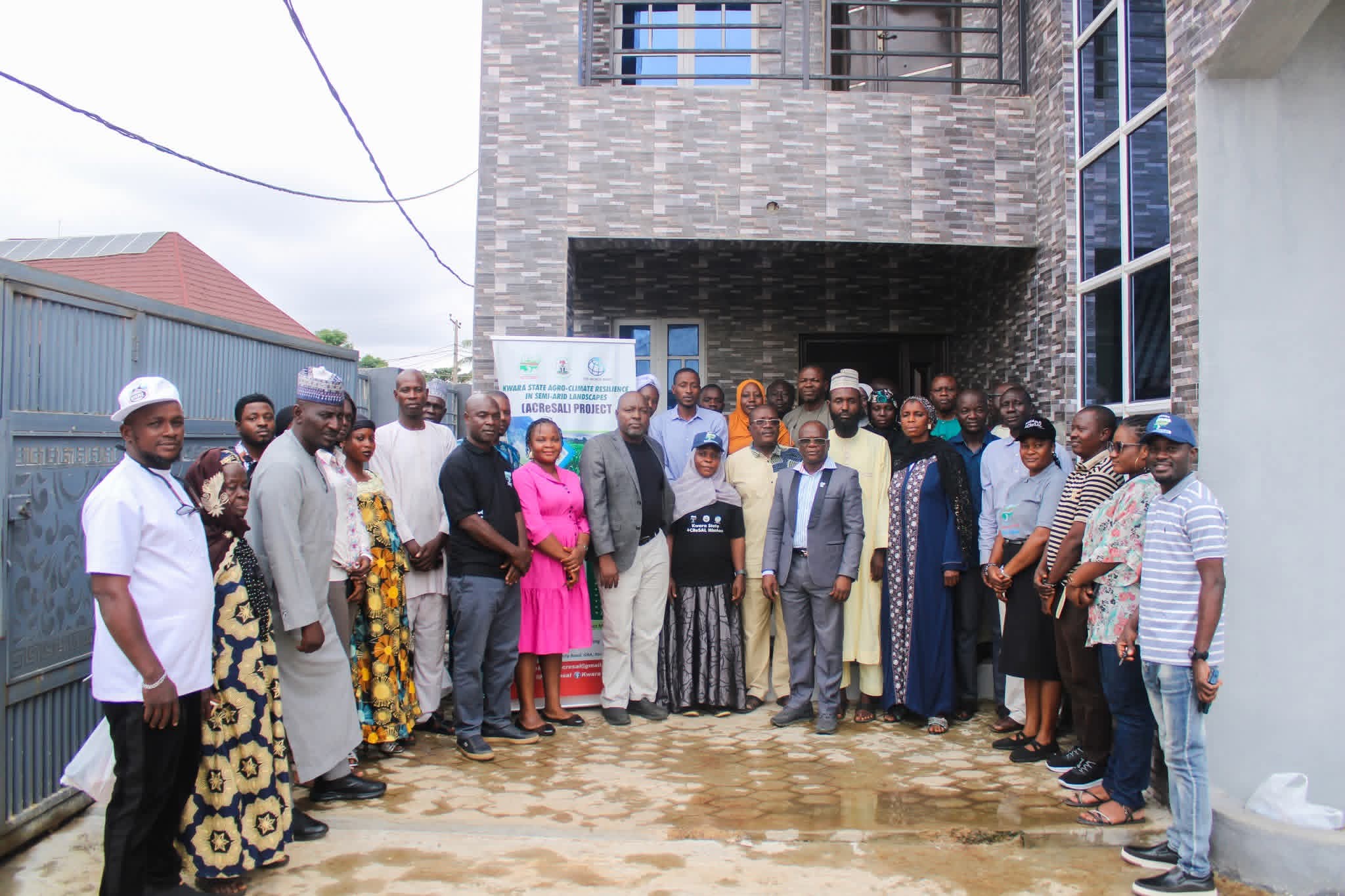
The Kwara State Agro-Climatic Resilience in Semi-Arid Landscapes (KWACReSAL) Project has reaffirmed its commitment to improving agricultural productivity and strengthening farmers' resilience to climate change through strategic partnerships and capacity-building initiatives across the state.
According to a statement by the project's spokesperson, Okanlawon Taiwo, the initiative will culminate in a comprehensive Training of Trainers programme for Agricultural Extension Agents and selected farmers from the project's three catchment areas.
To implement the initiative, KWACReSAL is collaborating with the International Institute of Tropical Agriculture (IITA), Ibadan, and the National Agricultural Extension and Research Liaison Services (NAERLS), Ahmadu Bello University, Zaria, to promote climate-smart agriculture in Kwara State.
Ahead of the training, a delegation from NAERLS and IITA held a one-day technical meeting with the KWACReSAL State Project Management Unit (SPMU) to review implementation strategies and assess plans for climate-smart agriculture interventions under the ACReSAL Project.
The meeting focused on the establishment of demonstration plots, Farmer Field Schools, certified seed production, extension service delivery, digital monitoring systems and implementation timelines to ensure all stakeholders were aligned before field activities commenced.
The delegation also paid courtesy visits to the management of the Ministries of Environment and Agriculture and Rural Development to strengthen institutional collaboration and seek government support for the successful implementation of the project.
The engagements paved the way for the Training of Trainers organised by KWACReSAL in partnership with NAERLS and IITA at the project's State Project Management Unit office in GRA, Ilorin.
Speaking at the opening of the training, the State Project Coordinator of KWACReSAL, Alhaji Shamsideen Olatunbosun Aregbe, described the programme as a strategic investment in the future of agriculture in Kwara State.
He said the success of the ACReSAL Project largely depends on strengthening the capacity of agricultural extension agents to transfer climate-smart technologies and modern farming practices to farmers across the state.
Aregbe urged participants drawn from agricultural institutions, extension services, local government councils and farming communities to maximise the opportunity by acquiring practical knowledge that would improve productivity and enhance resilience against climate change.
He explained that the training was designed to expose participants to innovative agricultural technologies and best practices capable of increasing crop yields, improving soil fertility and ensuring better harvests despite changing weather patterns.
According to him, extension agents remain the vital link between research institutions and farming communities, providing technical guidance, mentorship and continuous support to farmers.
He encouraged participants to pay close attention to the training sessions, adhere to recommended agronomic practices and replicate the knowledge gained in their respective communities to achieve a wider impact.
Aregbe also expressed confidence in the expertise of the resource persons from NAERLS and IITA, noting that the collaboration reflects the project's commitment to deploying science-based and climate-resilient agricultural solutions that will improve livelihoods and strengthen food security in Kwara State.
During one of the technical sessions, Engineer Luqman Durojaiye of NAERLS said climate change has continued to disrupt traditional farming systems through erratic rainfall, prolonged dry spells and declining soil productivity, making climate-smart agriculture increasingly necessary.
He explained that the intervention would utilise Farmer Field Schools, Mother Demonstration Plots, Baby Demonstration Plots and Local Government Demonstration Farms as practical learning centres where farmers would observe, evaluate and adopt improved technologies suitable for their local environments.
Durojaiye stressed that selecting farming technologies based on prevailing soil and climatic conditions remains essential for achieving sustainable agricultural productivity, while calling for stronger collaboration among extension agents, researchers, local governments and farming communities.
Also speaking, IITA resource person, Dr. Akeem Ajeigbe, unveiled the implementation strategy for establishing demonstration plots across participating local government areas.
He explained that each participating local government would have one centrally located Mother Demonstration Plot supported by 25 Baby Demonstration Plots to facilitate practical learning and accelerate the adoption of climate-smart technologies.
According to him, designated extension experts will supervise the demonstration plots, provide technical guidance and monitor implementation throughout the farming season, while digital reporting applications and virtual training platforms will be deployed to strengthen monitoring, evaluation and communication.
He encouraged extension agents to develop basic digital skills to effectively utilise the reporting platforms, assuring participants that IITA would provide operational manuals, technical support and continuous capacity building.
Dr. Ajeigbe reaffirmed IITA's commitment to working closely with NAERLS, KWACReSAL and other technical partners to deploy improved crop varieties, promote certified community seed production, encourage micro-dosing fertiliser application and strengthen sustainable farming systems across the project's catchment communities.
He added that the intervention, scheduled to run initially for ten months, is expected to improve farmers' resilience, increase agricultural productivity and establish sustainable climate-smart farming practices with long-term benefits for rural communities.
Participants at the training included representatives of the Ministries of Environment, Water Resources, Agriculture and Rural Development, the Kwara Agricultural Development Project (KWADP), as well as members of the ACReSAL technical team.
Cloud Tag: What's trending
Click on a word/phrase to read more about it.
Yakub Ali-Agan Halidu Danbaba Sheikh Alimi Monthly Sanitation Kwara United Azeez Salawu Iyiola Oyedepo Okin Biscuit Rafiu Ibrahim Sanitation Exercise Okiki Galadiman Ngeri Kwara Central James Ayeni Dan-Kazeem Adegoke Bamidele Read With Me Saka Abimbola Isau Public Holiday Isin Kayode Ibrahim CKNG Samuel Elizabeth Keatswa Oko Erin JMK Construction Company Limited CCT Kwara Consultative Forum Abdulraheem Olesin Idofin Abdulrazaq Adebayo Isiaq Khadeejah Kwara Coalition Of Business And Professional Associations Bola Ahmed Tinubu Moronfoye Na\'Allah Mogaji Aare C2c@kwarastate.gov.ng Alao Ayotunde Budo-Egba Iyabo Dupe Adekeye 11th Galadima Afusat Nike Ibrahim Olupako Kubra Kazum Aremu Odolaye Isapa Association Of Kwara State Online Media Practitioners Osinbajo Hassan Oyeleke Abdulrauf Yusuf Oloye Valsolar Ilorin Talaka Parapo (ITP) Akume CCEPE Jamiu Oyawoye Amosa Surajudeen Akanbi Shuaibu Yaman Sheikh Ridhwanullah El-ilory Quareeb IQRA College Haliru Yahaya Mope Dasuki Belgore TESCOM Dele Belgore Adamu Jemilat-Baki Ilorin.Info Law School Scholarship Amusement Park UITH Mazars Consulting Markaz Arabic And Islamic Training Institute, Agege Mahee Abdulkadir Alfa Belgore Kolo Rex Olawoye