


The World of Ilorin Female Butchers
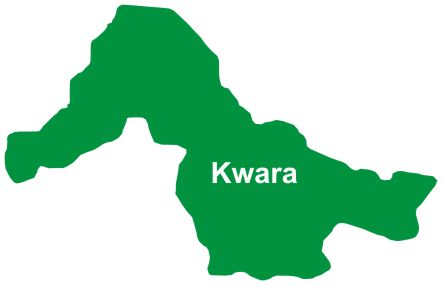
In Ilorin, the Kwara state capital, butchery and meat selling believed to be the exclusive business of men in some parts of the country is found to be one of the fastest growing businesses among the womenfolk. Weekly Trust was at Ipata market in Ilorin East Local Government Area which houses the major abattoir in the state.
Ipata, the name of a famous market in Ilorin was derived from Alapata which means butcher or meat seller in the Yoruba dialect. Though the market also plays host to traders of food stuff as well as merchandise, it is the major abattoir selling meat to many residents of the state.
Apart from Sundays when the abattoir is always on break with no cow slaughtered, it often bubbles in the morning when it opens for the day's market as the butchers hustle to attend to consumers who wait patiently to receive their daily supply. Among the butchers are females whom the abattoir remains the only source of livelihood.
Like their male counterparts, these women butchers in the market are in large numbers with many of them said to have inherited the business from their ancestors, Weekly Trust gathered. Many of them have made a fortune of the business and this is evident in their ability to buy cows of their own which they butcher and sell to retailers and consumers on daily basis. Therefore, to them, the business is their life line.
However, unlike in other parts of the country and especially the north, the case of Ilorin is peculiar. The northern Nigerian city is multi-cultural and multi-lingual in nature with a culture and custom different from other contemporary cities in Nigeria. For instance, while meat selling and butchering is the exclusive trade of men across northern states and cities, it is not the same in Ilorin where both sexes engage in it.
Investigations by Weekly Trust at the market showed that most of the butchers have spent more than 15 to 20 years in the abattoir, while for some, it is hereditary. They were born in the business and took over from their progenitors who engaged in it as a means of livelihood. That is why in Ipata market, both men and women could be seen with knives and cutlasses, putting to practise the skills they have mastered from years immemorial.
It was however gathered that men mostly slaughter the animals while the butchering is done by both sex. Also majority of those who sell the meat are women as found in major markets visited by our correspondent, including Ipata Oloje, another abattoir in Ilorin West, Yoruba road market, Obbo road, Emir's market, New Market, Mandate ultra-modern Market, among others. Also, only women could be seen on the streets of Ilorin hawking meat. The few men who hawk the food item in Ilorin Township are members of the Hausa community.
One of the female butchers at Ipata, Mrs. Idowu Obalowu, aged 34, who resides at Shao Garage in Ilorin, told Weekly Trust that she has been in the business for 15 years and has no regret being a butcher, saying it is the business she inherited from her mother.
She said, "For the past 15 years, I have been a butcher selling meat in this market and people have already known me with it. It is what I know how to do best. I don't have any other business. Even if I get another job today, I don't think I can relinquish butchering," She said, and disclosed that it is the men that slaughter the cows while they assist in butchering and vending the meat.
"For those who cannot afford to buy a cow, you don't have to own a penny before you can sell meat. You could easily get supplies from those who slaughter the cows and pay them back after the sales. From the gain, you can start on your own. That was how I started and today I have cause to thank Allah," she said.
As the case always is, from 8:00 a.m., Ipata abattoir would be filled with both male and female butchers ready and set for the day's business, and when it is about 2pm all the day's animals would have been slaughtered and the meat sold to retailers who re-sell to the consumers.
Alhaja Mariam Sidiq Alapata, an octogenarian, has been a butcher for 50 years; the business she inherited from her late mother. According to her, the business was very lucrative in those days but today the prices of cows have skyrocketed beyond imagination.
She said, "I remember a cow was once sold for N70 and the most expensive then was not up to N20, 000 but now the price has increased to N100, 000, N120, 000, 150, 000 and N200, 000.
"Despite this we cannot quit the business because this is the only way we have. We don't have another means of livelihood. From this is how we get to send our children to school, feed the family and take care of other responsibilities at home".
Asked how she feels being a butcher, a business viewed as exclusively reserved for men, Alapata who hails from Ilorin East explained that butchering in Ilorin is for both sexes. "It has been like that over the years. It is what we inherited from our forefathers and great grandmothers. You see both men and women in the abattoir butchering the animals and selling to prospective buyers," she added.
The elderly woman however said she would want the government to assist them in clearing the hurdles faced in purchasing cows. According to her, the insurgency in the northern part of the country has prevented them from travelling to Sokoto, Maiduguri, and neighbouring countries like Chad and Niger where they could buy cows at a cheaper rate.
"So, we want to appeal to the government to assist us in this regard and grant us zero import duty to bring in cows from the neighbouring countries," Alhaja Sidiq said.
On her part, Alhaja Mariam Ahmed popularly known as Iya Abu at the market who also said her sojourn in Ipata market dated 50 years disclosed that God has blessed her in the business. "So you don't expect me to leave the business which gives me my daily bread," she said, explaining that while she buys the cows on her own, her brother is responsible for slaughtering the animals.
"By the grace of God, I don't have any problem in this market. We come around 9: 00 a.m. in the morning and return home latest by 4: 00 p.m. God has been with us over the years. This is the business of our mothers and grandmothers. They never had regrets doing it and that is why we followed suit and we don't have regrets either," she explained.
A female meat seller who hawks the item in Ilorin Township said she buys the meat on daily basis from butchers at Ipata and then sell to her customers, especially food sellers and major canteens within the metropolis. Asked about her experience with butchers at Ipata market, she said, so far, it has been good.
Cloud Tag: What's trending
Click on a word/phrase to read more about it.
CCEPE SWAN Kale Belgore Chikanda Jaiz Bank High Court Sobi Specialist Hospital Ibrahim Oniye Olokoba Abdulrahman Abdullahi Kayode Michael Nzwekwe Law School Scholarship John Olajide Adedipe Memunat Monsuma Adaramaja COVID-19 Palliatives Yemi Sanni Mufutau Gbadamosi Esuwoye Clara Nwachukwu Ilorin South General Hospital Saliu Shola Taofeek Irepodun Isaac Aderemi Kolawole Musa Alhassan Buge Malete Oke Sunna Wahab Issa Alumni Association Of The Federal Polytechnic Offa Wole Oke Abegunde Goke Sabi Baaziki Sulaiman Babs Iwarere Federal Polytechnic Offa Post-utme Umar Gunu Bureau Of Lands Bahago Geri-Alimi Split Diamond Interchange HAMFAT Clinic And Maternity Abdulwasiu Bolaji Adeyi Sarakite TESCOM 2025 Rotimi Samuel Olujide Maja Adebayo Salami Magaji Are Oyedun Juliana Funke Al-Adaby Muhammadu Gobir Okeose Christian Cementary Abubakar B.M Jamila Bio Ibrahim Hakeem Idris Muhammad Ghali Alaaya Halimat Yusuf Kaiama Jimoh Lambe Abdulkareem Tafida Of Ilorin Kubra Kazum Senate Sarah Alade Asa Umaru Saro Muazam Nayaya Olomu Of Omu-Aran Mohammed Abduraheem Zainab Abass Daud Adeshola Abdulmajeed Wahab Muideen Olaniyi Alalade Shuaib Abdulkadir Yahaya Oloriegbe Olabode Towoju Al-Hikmah Radio Kayode Ogunlowo