


Prof Adedokun Calls for Digital Tax System, Stronger Infrastructure at UNIOFFA Inaugural Lecture
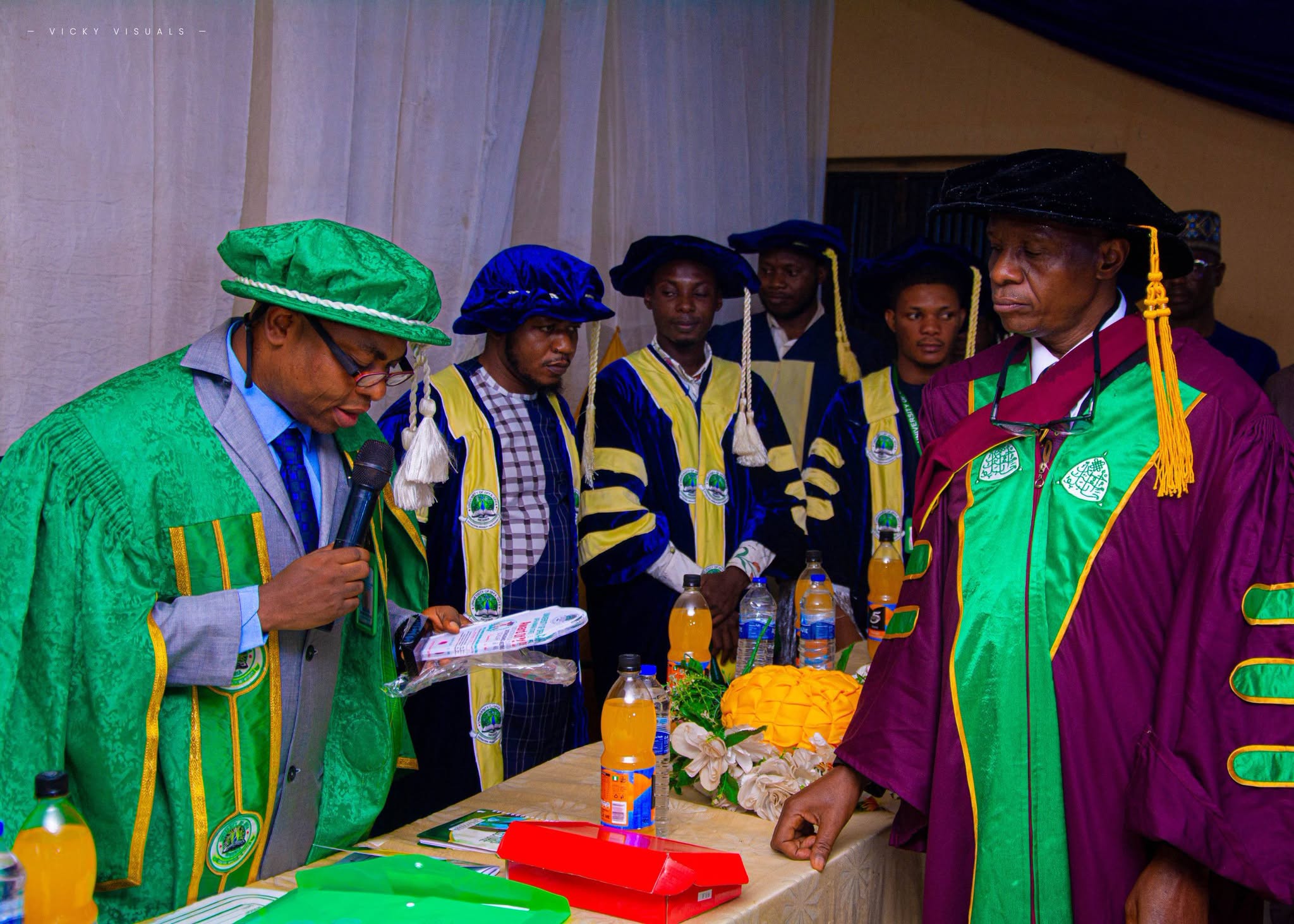
A Professor of Tax Law and Enforcement Policy at the University of Offa (UNIOFFA), Professor Kareem Adeyimika Adedokun, has called for comprehensive reforms in Nigeria's tax administration, urging governments to embrace digital taxation, invest in critical infrastructure and rebuild public trust to accelerate national development.
Professor Adedokun made the call while delivering the University's Second Inaugural Lecture titled, "The Broken Social Contract: A Scholar's Critical Perspective on Tax Obligation, State Legitimacy and the Crisis of Development," at the institution's auditorium on Wednesday.
In the lecture, he argued that simplifying the language of tax laws would improve public confidence, encourage voluntary compliance, reduce administrative costs and promote fairness within the nation's tax system.
According to him, clearly drafted tax legislation would eliminate confusion that often results in unintentional tax default while making tax obligations easier for taxpayers, practitioners and administrators to understand.
Presenting findings from his research, Professor Adedokun observed that Nigeria's tax system currently lacks horizontal equity, explaining that although the country's population continues to grow, the number of active taxpayers is declining.
He described the trend as a major imbalance that weakens public confidence in government's ability to uphold the social contract and effectively manage public resources.
The tax law expert also identified the slow adoption of digital technology by many state revenue agencies as a major challenge to efficient tax administration.
He urged state governments to fully embrace digital platforms and automation to modernise tax collection, minimise revenue leakages and expand the tax net to include businesses operating within the informal and digital economy.
According to him, transitioning to an automated electronic taxation system has become essential for improving economic efficiency and achieving sustainable revenue generation.
Professor Adedokun further linked Nigeria's low tax morale to persistent infrastructure deficits, noting that poor access to electricity, clean water, sanitation and quality road networks continues to reduce business profitability, limit citizens' income and discourage tax compliance.
He maintained that the country's infrastructure gap remains a major obstacle to sustainable economic growth and development.
The professor also called for an inclusive tax dialogue involving civil society organisations, stressing that taxpayers should be better organised to engage government on taxation, accountability and public service delivery.
Among his recommendations, he advocated increased investment in infrastructure, particularly Information and Communication Technology (ICT), as well as policy-driven research to strengthen tax administration and revenue generation.
He urged state revenue agencies to emulate the Federal Government and the Lagos Internal Revenue Service by adopting data-driven digital tax systems capable of improving Nigeria's tax-to-GDP ratio.
Professor Adedokun also recommended restoring the Tax Clearance Certificate (TCC) as a mandatory requirement for aspirants seeking elective political offices.
According to him, political office holders should demonstrate compliance with their civic obligations before being entrusted with the management of public resources, adding that tax compliance would strengthen their moral authority to govern.
On public awareness, the professor advocated sustained taxpayer education through nationwide awareness campaigns, taxpayers' awards, integration of tax education into school curricula and prudent utilisation of tax revenues.
He explained that educating citizens on the benefits of taxation would encourage voluntary compliance more effectively than coercive enforcement measures, while reducing the cost of tax administration and increasing government revenue.
The inaugural lecture attracted academics, legal practitioners, tax professionals, traditional rulers and public officials from across the country.
Among those in attendance were the Founder of the University of Offa, Dr Rasaq Omoniyi Oyewale; the Vice-Chancellor, Professor Kazeem Alagbe Gbolagade; the Executive Chairman of the Kwara State Internal Revenue Service (KW-IRS), Shade Omoniyi; as well as representatives of the Chancellor of the University and Olofa of Offa.
Scholars and professionals from the University of Ilorin, Kwara State University, Summit University, Ajayi Crowther University, the Kwara State High Court of Justice, the Oyo State High Court and the Chartered Institute of Taxation of Nigeria (CITN), among others, also attended the event.
Cloud Tag: What's trending
Click on a word/phrase to read more about it.
Tsaragi Saad Omo Iya Ella Supreme Tissue Paper Muhammad-Mustapha Suleiman Kwara State Television Maimunat Oloriegbe Micheal Imoudu Osuwa Salman Jawondo Olatunji Bamgbola Kwara Coalition Of Business And Professional Associations Olaosebikan Onikijipa Iyiola Oyedepo ER-KANG Amuda Musbau General Hospital Rashidi Yekini Nigeria Customs Service KWACOBPA Hamid Bobboyi Standard Organization Of Nigeria Quran Chemiroy Nigeria Limited Roheemat Hammed Olokoba Sulyman Salihu S. Yaru Omupo Mamman Saba Jibril Dogara Alfa Modibbo Belgore Makama Of Ilorin Kale Belgore National Union Of Road Transport Workers NSCIA Oba Of Jebba Bayo Onimago GRA Erubu Ubandoma Of Ilorin Senior Ibrahim Suleiman Paul Olawoore Noah Yusuf Olumide Daniel Ibitoye Bisi Oyeleke Ishaq Oloyede Muhammed Danjuma CACOVID Shehu Alimi Foundation Cassava Growers\' Association Otuka Garuba Alikinla Shittu Ileloke Oke-Kura Abdulkarim Adisa Kpotum Mohammed Baba Dumagi Kwara State Television (KWTV) Jide Oyinloye Kwara Central Yahaya Dumoye Mustapha AbdulGaniyu Arinola Fatimoh Lawal Waheed Ibrahim Kehinde Boyede Abdulkareem Alabi Tunde Mukaila Mustapha Adesoye Sa\'adu Salau ENetSuD Jamiu Oyawoye Elerin Of Erin-Ile Erin-ile Abdulfatai Ahmed Isiaka Oniwa Afolasade Opeyemi Kemi Abubakar Atiku