

Govs battle cash crunch
•Delta, Imo, C'River, Oyo lead as states borrow N130bn in three months
•17 shortfall hits states' internally-generated revenue, debts rise to N5.5tn
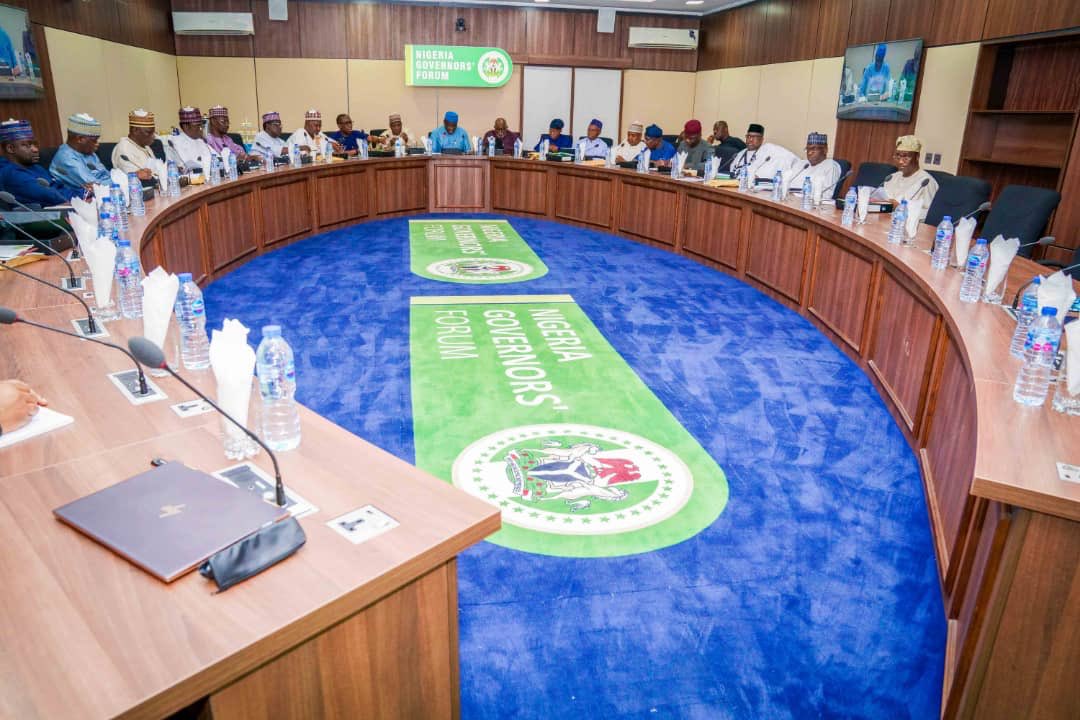
About 25 states in Nigeria suffered a shortage fall in internally generated revenue and struggle with cash crunch in the first quarter of 2023, findings by The PUNCH have shown.
Data obtained from the budget implementation report of each state showed that 25 states earned N182.26bn in Q1 2023.
This was a shortfall of 3.07 per cent or N5.77bn from the N188.03bn made in Q4 2022, based on a quarter-by-quarter analysis.
Although there are 36 states in Nigeria, Rivers and Sokoto have no data for Q1 2023 yet; Akwa Ibom has no data for Q1 2022, while Kwara, Edo, Kaduna, Lagos, Bauchi, Zamfara, Yobe, and Ogun have no data for Q4 2022.
Therefore, the figure for IGR was limited to 25 out of the 36 states in the country.
The PUNCH findings showed that the 25 states projected an IGR of N219.56bn for Q1 2023 but only made about N182.26bn, which means that they had a revenue performance of 83.01 per cent.
This also means that the revenue underperformed by 16.99 per cent as it failed to hit the states' revenue target.
However, the states recorded an increase in revenue by 30.34 per cent from N139.83bn recorded in Q1 2022.
Among the 25 states, Delta had the highest IGR of N40.51bn in Q1 2023.
It was followed by Anambra (N13.03bn), Oyo (N13.01bn), Ondo (N10.79bn), and Osun (N9.06bn).
It was also observed that Enugu had the lowest IGR of N2.32bn.
It was followed by Niger (N3.04bn), Taraba (N3.08bn), Imo (N3.16bn), and Katsina (N3.22bn).
The PUNCH also learnt that these 25 states have a total domestic debt of N3.12tn in Q1 2023.
This was an increase of N130bn in three months, according to data from the Debt Management Office.
Delta was the top debtor with about N421.78bn as of March 31, 2023.
It was followed by Imo (N202.55bn), Cross River (N196.27bn), Oyo (N161.73bn), and Plateau (N148.12bn).
Jigawa had the least domestic debt of N43.59bn as of March 31, 2023.
It was followed by Kebbi (N60.94bn), Katsina (N62.37bn), Nasarawa (N71.45bn), and Ondo (N75.51bn).
The PUNCH also learnt that 36 states got at least N713.57bn in Q1 2023, which was an increase of 20.85 per cent from N590.45bn in Q1 2022, according to reports from the Federation Accounts Allocation Committee.
A breakdown for 2023 showed that the states received N244.98bn in January, N236.46bn in February, N232.13bn in March.
A breakdown for 2022 showed that the states received N221.19bn in January, N179.25bn in February, N190.01bn in March.
According to the National Bureau of Statistics, states generate IGR from MDAs revenues, direct assessment (income tax), Pay-As-You Earn, road taxes, and other taxes such as levies on market traders, land registration, etc.
FAAC gets money from oil revenues and related taxes, revenues generated from the Nigerian Customs Service trade facilitation activities, company income tax, any sale of national assets as well as surplus and dividends from State Owned Enterprises.
A political economist, Prof Pat Utomi, earlier urged states to create an environment for wealth creation rather than depend solely on the federal allocation.
He said, “States must focus more on creating the environment for wealth creation. If you go back to the late 50s and early 60s, most of the developments that took place in Nigeria are from the subnational governments. They collected the revenues, and send 50 per cent of it to the centre but the military ruined all of that.
“So, Nigeria became more focused on sharing revenues than on the fundamental way of governing, which is the production and taxing earned revenue. Whenever there is no revenue to share, the States are in complete trouble and they become bureaucracies that are unable to manage themselves because they are dependent. This is not the way they should function.”
Cloud Tag: What's trending
Click on a word/phrase to read more about it.
Olatunde Olukoya Saad Omo\'ya ER-KANG Mining Nigeria Company Limited Mustapha Olanipekun Daud Adeshola National Pilot Okin Biscuit Saadu Alanamu Muhammad Sirajo Aliyu Aliyu Sabi COVID Taofik Abdulkareem Babaita Babatunde Idiagbon Abdulkadir Orire March 28 Hijaab Ebola Alimi Abdulrazaq Olusegun Adeniyi Afeyin-Olukuta March 18 Alao Ayotunde Alanamu Abdulrasaq Alaro Amos Justus Sayo KFA JUSUN Olushola Saraki Ayo Salami Salman Jawondo Oba Of Jebba Patigi Regatta Allocation Alfa Modibo Belgore Oloriegbe Saeedat Aliyu Lotus Bank Kale Kawu Adolescent Girls Initiative For Learning And Empowerment Lanre Badmas Onilorin Of Ilorin 3MTT Ogidi-Oloje Abdulmumini AbdulRazaq Aliyu Olatunji Ajanaku PAACO-PCL Consortium April 11 Minister Yakub Ali-Agan HAMFAT Clinic And Maternity Law School Scholarship Bola Olukoju Nupe Transition Implementation Committee International Aviation College Local Government Pakata Onikijipa Turaki Oluranti Idowu Sidikat Uthman Ajibola Ishaq Abdulkarim Rachael Obisesan Ahmed Alhasssan Niyi Osundare Public Holiday Christopher Tunji Ayeni Kwha.gov.ng Kwara Consultative Forum Suraj Tunji Oyewale KSIRS Lucky Omoluwa Ayobami Akanbi Abdulrauf Aliyu ASKOMP Saidu Kawu Isiaka Oniwa