


KW-IRS: 10 Year of Institutional Transformation - From a Statement of Ambition to a Statement of Maturity By Prof Muritala AWODUN
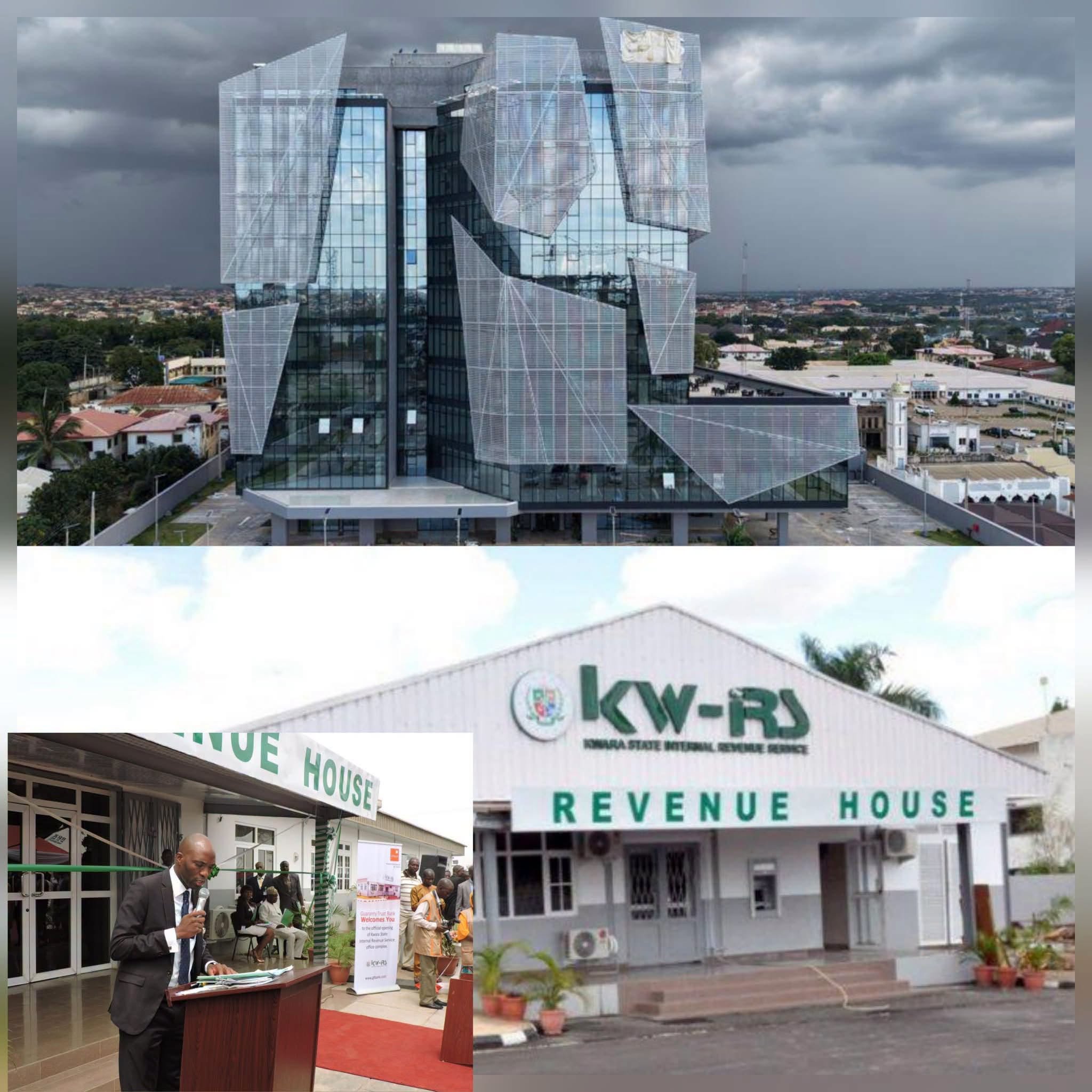
The completion and forthcoming commissioning of the new Revenue House of the Kwara State Internal Revenue Service is a landmark occasion in the continuing history of revenue administration and institutional development in Kwara State.
I therefore extend my warmest congratulations to the Executive Chairman, the management and the entire staff of KW-IRS on this important achievement.
For me, however, this occasion carries an additional significance, from institutional ambition to institutional maturity.
Ten years ago, specifically on Monday, February 8, 2016, the first Revenue House of the Kwara State Internal Revenue Service was commissioned. Over a decade later, KW-IRS is commissioning a new Revenue House, on the same spot, marking a major transformation and actualization of that statement of ambition made a decade ago, into a statement of maturity of that institution.
That ten-year journey provides a remarkable opportunity to reflect on how far the institution has come, and, more importantly, on what the future requires of it.
A DECADE OF INSTITUTIONAL EVOLUTION
The first Revenue House represented much more than a new physical structure at the time. It was part of a broader effort to establish a modern revenue institution capable of supporting the fiscal sustainability and development aspirations of Kwara State.
Having had the privilege of contributing to that transformation at an important stage of KW-IRS's institutional development, I am particularly pleased to see the Service arrive at this new milestone.
The most important lesson of the past decade is that institutions must continuously evolve. A building can provide a home for an institution, but it is the institution's people, systems, values, technology, leadership and culture that determine its lasting impact.
The first Revenue House therefore represented one stage of the journey. This new Revenue House represents another. And the difference between the two is not merely architectural. It is a reflection of the institutional journey KW-IRS has undertaken over the past decade.
FROM REVENUE COLLECTION TO INSTITUTION BUILDING
When we embarked on the transformation agenda for KW-IRS in 2015, the challenge was never simply to increase tax collections. The larger objective was to build an institution. An institution with competent and motivated people. An institution driven by clearly defined processes. An institution that embraced technology. An institution committed to professional development. An institution capable of institutionalising knowledge rather than depending on individuals. And an institution that understood that revenue mobilisation is ultimately about financing development.
This was the foundation of the People, Process and Technology (PPT) approach. It was also the context in which the philosophy of Taxpreneurship was developed and advanced. Taxpreneurship was premised on the understanding that taxation should not be viewed simply as government taking from citizens and businesses. It should be understood as part of the social and economic contract through which citizens, businesses and government collectively build the society in which they operate.
A modern revenue service must therefore be both a revenue institution and a development institution.
THE PEOPLE BEHIND THE INSTITUTION
One of the defining elements of the transformation journey which we embarked upon was investment in people. Capacity development was not treated as an occasional activity but as a continuing institutional requirement. Staff at different levels and across different functions were exposed to structured training, professional development and broader perspectives on modern revenue administration.
The underlying philosophy was simple:
If you want to build a sustainable institution, build the people who will sustain it.
That principle remains relevant and is the reason why the edifice you see today could be embarked upon and successfully completed as an embodiment of institutional maturity.
The new Revenue House should therefore not only be seen as a building to accommodate KW-IRS personnel; it should become a centre for continuous professional development, innovation, institutional learning and excellence in revenue administration.
THE INSTITUTION MUST OUTLIVE ITS BUILDINGS
The greatest measure of institutional success is not the size of its buildings or the amount of revenue collected at any particular point in time. It is whether the institution can continue to perform, improve and reinvent itself long after the individuals who established particular programmes or reforms have moved on. What you see today is a confirmation of a well laid institutional foundation.
This is why systems such as quality management, business continuity, professional development, institutional knowledge and succession planning were important components of the transformation agenda we embarked on and handed over.
The objective was to build an institution that could survive personalities, administrations and changing circumstances.
The fact that, ten years after the first Revenue House was commissioned, KW-IRS is commissioning another major institutional facility is itself evidence of continuing institutional development.
A REVENUE HOUSE FOR THE NEXT DECADE
The most important concern now for all is the next ten years, which to me should be even more ambitious, based on the evidence of vision we now can all see.
KW-IRS must increasingly become a data-driven, technology-enabled, intelligence-led and taxpayer-centred revenue institution.
It must continuously broaden the tax base rather than simply increase the burden on existing taxpayers. It must deepen voluntary compliance. It must use data to understand the State's economic activities. It must identify emerging sectors and businesses. It must make compliance increasingly simple and transparent. And it must strengthen the relationship between taxpayers and government.
Above all, KW-IRS must recognise that sustainable revenue growth ultimately depends on sustainable economic growth.
REVENUE AND KWARA'S ECONOMIC TRANSFORMATION
The next decade of Kwara's development will require a stronger connection between the State's revenue strategy and its economic transformation strategy.
Agriculture, agro-processing, manufacturing, commerce, services, technology, tourism, the creative economy and other productive activities must become increasingly important components of the State's economic base.
As the productive economy expands, the revenue base should expand with it.
This creates the virtuous cycle that every developing State should seek:
Economic productivity that leads to expanding businesses and incomes will result in broader tax base, stronger IGR, increased public investment, that will bring about greater productivity and further economic growth and development.
That is the deeper meaning of revenue mobilisation. It is not simply about collecting more money. It is about creating the fiscal capacity to build a better society.
FROM ONE REVENUE HOUSE TO AN INSTITUTIONAL LEGACY
The historical significance of the completion and commissioning of this new Revenue House is therefore worth emphasising. In February 2016, KW-IRS commissioned its first Revenue House to commence the business of revenue reform in Kwara State with an audacious institutional ambition then.
In 2026, ten years later, KW-IRS is commissioning another Revenue House, on the same spot, to confirm institutional maturity. Between those two moments lies a decade of institutional evolution.
The first Revenue House was the yesterday of KW-IRS and a statement of ambition. The new Revenue House obviously is the today of KW-IRS with a statement of maturity. The next decade, which is the tomorrow of KW-IRS should be a statement of transformation.
May this new building become a house of professionalism, integrity, innovation and service. May it provide an environment in which KW-IRS personnel can continuously develop their capabilities. May it strengthen the Service's capacity to mobilise sustainable revenue. May it deepen the trust between government and taxpayers. And may it contribute ultimately to the emergence of a secure, productive and prosperous Kwara State.
CONGRATULATIONS
I congratulate the Executive Chairman, the management and the entire KW-IRS family on this historic occasion.
I also acknowledge the successive leaderships, board members, management teams and staff whose contributions over the years have helped to build and strengthen the institution.
As we look back at the first Revenue House of February 2016 and look forward from this new milestone in 2026, one message stands out:
Buildings change. Leadership changes. Administrations change. But institutions must endure. The true legacy of the past decade will therefore not be measured merely by the buildings constructed or the revenue collected, but by the strength of the institution that has been built, which is found in the people, process and system that represents the solid foundation upon which KW-IRS stands.
May the next decade of KW-IRS be even more consequential than the last. The success we see today, in terms of revenue growth and institutional development belongs to all.
Congratulations to the KW-IRS family.
Congratulations to Kwara State.
And congratulations to all those who have contributed to this continuing journey of institutional transformation.
Professor Muritala AWODUN, FCTI, FNIM
Former Executive Chairman
Kwara State Internal Revenue Service
(October 2015 - September 2019)
Cloud Tag: What's trending
Click on a word/phrase to read more about it.
Marafan Shonga Aishat Mohammed Lawal Bolaji Abdullahi Makama Of Kaiama Aliyu Kora Sabi Bayer AG Olateju Lukman Yeketi Transition Implementation Committee Joshua Adeyemi Adimula Musa Aibinu SDP Kwara University Of Education Charles Ibitoye Moses Rahman Popoola Jide Oyinloye Tanke Ayo Salami Emir Of Kano Young Progressives Party AIT Ilorin Adama Isa AbdulQowiy Olododo Maryam Nurudeen Ganiyu Taofiq Suleiman Alege Kuranga IDPU Ibraheem Abdullateef Hameed Oladipupo Ali Ayobola Ipinlaiye Kazeem Oladepo Ilorin International Airport Aliyu Kora-Sabi Obasanjo Okedare Kwabes Isaac Aderemi Kolawole Adedayo Yusuf Abdulkareem Ibrahim Abdulkadir Abikan Ayedun Ibrahim Jawondo Mahmud Babatunde Baker Abdulganiyu AbdulAzeez Nigerian Supreme Council For Islamic Affairs John Mayokun Dada Aishat Sulu-Gambari Adebara Abdul Jimoh Mohammed Ilesha-Baruba-Gwanara Abatemi Usman Yoonus Kola Olatinwo Ballah Muslim Cementary Sheikh Alimi Kwara State Governor Rafiu Ibrahim Budo Egba ITEM 7 Ayo Adeyemi Ibrahim Abdullahi Trade Lenda SME Fair Tinubu ER-KANG Mining Okoolowo Lawal Arinola Kudirat Aisha Ahman-Pategi Abdulrazaq Sanni Bola Olukoju Wahab Femi Agbaje Minimum Wage Awoye Peter Amogbonjaye Shero Dele Momodu Okanlawon Musa Hassan Saliu Playing Host