


Garment Factory: Kwara Targets 2% of Global Market
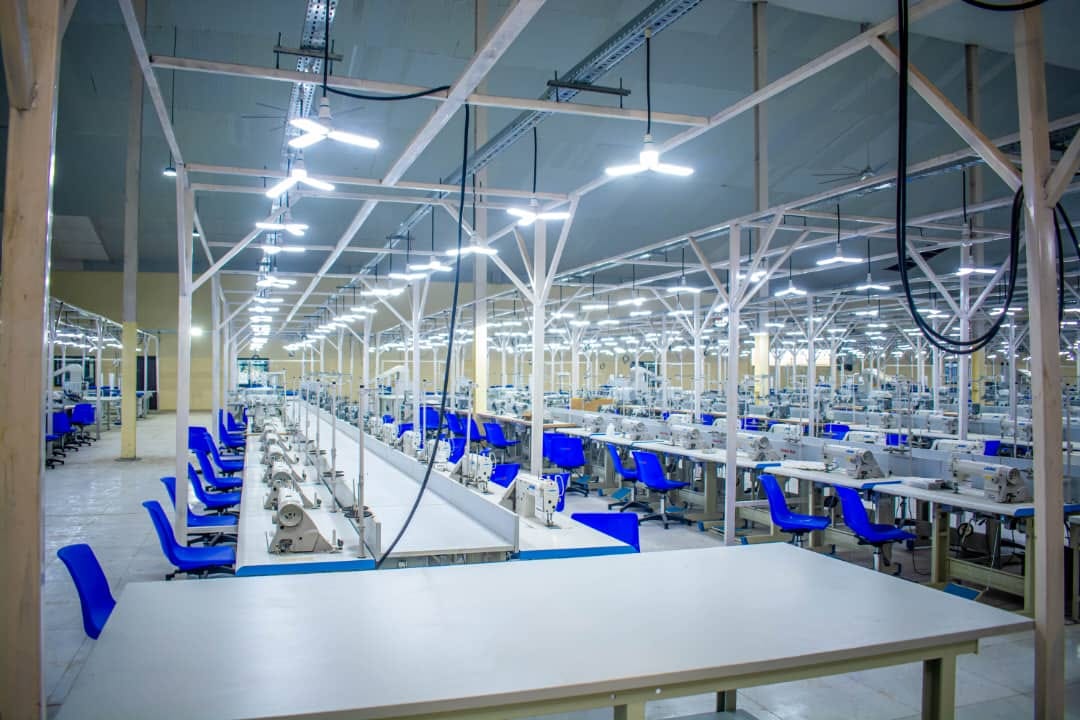
Kwara State is poised to capture at least two percent of the global garment market when it begins full operations in 2024, with daily production of 10,000 garments from its newly set up factory that is the biggest in West Africa subregion. The Managing Director of the state-owned garment factory, Olubukola Kifayat Adedeji, disclosed this to journalists in Ilorin, the state capital, during a tour of the facility.
The garment factory is one of the many initiatives of Governor AbdulRahman AbdulRazaq to drive socio-economic growth in the state. She said: “There is a huge gap for ready-to-wear garments. Most Nigerians depend on imported goods. It is disheartening that we have a lot of creative talents in Nigeria, but they do not have the opportunity to mass produce. This is one of the gaps we intend to fill. “Here, we redefine garment production in Nigeria and West African as a whole. We will be involved in designing and manufacturing of ready-to-wear garments for local, international brands and corporate organisations.
“The global garment factory is largely dominated by the Asian countries, particularly China that has 31.3 per cent of total market. But Africa has 6.7 per cent of the market share and Nigeria has 2.7 per cent. With this garment factory, we will command at least two per cent of the market.” Adedeji said the factory had some of the most sophisticated machines used in ready-to-wear garment production, including the Oshima automatic fabric cutting machine, which she said is the first of its kind to be commissioned in West Africa at the moment.
She said production of garments would begin from the first quarter of 2024 as the factory is currently hiring its first set of workers, adding that she is impressed by the quality of talents who have shown up since the exercise began. “We are at the recruitment stage. We have all our equipment in place. All the machines have been tested. We have recruited supervisors. We are going to the next phase of recruitment, which will be recruiting the production workers.
At this stage, we intend to employ 300 workers at the moment and at full capacity, we intend to employ 4,000 workers,” Adedeji said. “This is a much bigger one, compared to anyone that existed before. For the people of Kwara State, the coming of this factory means more revenue will be internally generated. It will open up the economy of the state along different value chains. “When we start, there will be a boost in all sectors of the state economy from transportation to and fro within the town, catering services, supply of raw materials, and the likes.
It is a boost to the state economy. And when we start exportation, it will be a source of foreign exchange revenue for the state. “Backward integration is part of the future plan. Our technical partners will be with us for some months, and they are providing raw materials. But eventually, we intend to back integrate and source for our raw materials locally. Part of what we are looking at is setting up a farm to produce our cotton so that prices of our products will be more competitive in the global market at any time.
Once we have stable competitive prices, we are sure that we will be available for all markets. “We have set up a department for high quality control. There is a place to stack finished products. The products will not be allowed to leave this factory if they have not met the standard we put in place. So, at any point in time, quality control officers will be trained and rotated continuously so that our high standards are maintained,” she added.
She said the setting up of the factory followed a clear feasibility study, which shows different gaps and the way to tap into the market and ensure sustainability. “We are aware there is a gap and we are looking to filling the gap,” Adedeji said, adding: “We are looking at 10,000 garments daily because we've got a cutting machine which is one of its kinds in West Africa, at the moment. It can cut 10,000 out- fits in an eight-hour shift. So, on a daily basis, we intend to produce 10,000 garments.
Cloud Tag: What's trending
Click on a word/phrase to read more about it.
Is\'haq Modibbo Kawu Belgore Bola Ahmed Tinubu Garba Idris Ajia Neo Mundo Ltd Islamic Development Bank Lai Mohammed MMWG Oju Ekun Sarumi Woro Abdulganiyu Oladosu Wahab Isa Ajakaye Muftau Akanbi Oke Abdullahi AbdulMajeed Ayodele Olaosebikan Bashirat Bola Bello Yusuf Aiyedun Centre For Community Empowerment And Poverty Eradication Mujtabah Bature Kupchi Hosea Maxwell Aliyu Muhammad Saifudeen Olokoba Abdullahi Ayinla Idofin Freshvine Nigeria Limited Abdulhakeem Amao Olatunji Abdulmumeen Bilikisu Oniyangi Chartered Institute Of Personnel Management Of Nigeria Alapansapa Special Agro-industrial Processing Zone SUBEB Oluronke Adeyemi Ishola Moses Abiodun Post-utme Muhammad Yahya Umar Saro Abdul-Rasheed Na\'Allah Abdulraheem Yusuf Olosi Of Osi Baaziki Sulaiman Christopher Ayeni Lola Ashiru Otunba Taiwo Joseph Ahmed Anilelerin Lai Gobir Saduki Lafiagi REO CAKES Abdulrauf Aliyu Edu Ethical College Adeniyi Ojo Ahmed Shuaib Buranga Oba David Oyerinola Adedunmoye Hakeem Lawal TESCOM IEDPU Agboola Babatunde Abdulkadir Orire Mary Arinde Ayo Adeyemi Nigeria Computer Society JAAC Saidu Kawu Ilorin Talaka Parapo (ITP) Shero Abdul Jimoh Mohammed Sheikh Alimi Sa\'adu Salahu Lawan Agbarere Sarah Jubril KWATMA Odo-Owa Tayo Alao Mohammed Ajia Ibrahim